

Preserve the Bounty of Summer: A Traditional Pickled Cucumbers Recipe
Table of Contents
- Things you need to know about cucumbers
- Pickling Method: Vinegar vs. Brine
- Frequently Asked Questions about pickled cucumbers
- When to Savor the Full Flavor of Your Pickles
- How Long Does It Take for Cucumbers to Become Pickles?
- Sliced or Whole Cucumbers: Which is Better for Pickling?
- Shelf Life of Canned Pickles
- The Vital Role of Vinegar in Pickling
- Sweet and Sour Pickle Recipe?
- Can You Reuse Pickle Juice for a New Batch of Pickles?
- Storing Jars Without a Water Bath
- Why No Water Bath?
- Where to Store the Jars
- Open Jar, Freshness Duration
- Where to buy pickled cucumbers?
Unlock the secret to enjoying the crisp, tangy goodness of pickled cucumbers all through the cold winter months with our cherished family recipe. These pickled cucumbers aren't your typical quick refrigerator pickles; they're a winter delicacy, perfect for complementing your favorite cold-weather dishes. In this article, BPFOOD will give all detailed information and notes about the method of pickled cucumbers
Things you need to know about cucumbers
The Perfect Pickling Season
If you reside in a region blessed with four distinct seasons, the period from late August to late October is your golden opportunity to prepare for the upcoming winter. During this time, nature bestows upon us a generous cucumber harvest and an abundance of other seasonal vegetables. Embrace this old-school pickling tradition to savor the fresh flavors of these vegetables long after their growing season has faded into memory.
Selecting the Right Cucumbers
Different cucumber varieties yield varying pickling results:
- Kirby Cucumbers: These small, bumpy-skinned cucumbers with firm flesh are farmer's market favorites.
- Gherkins or Cornichons: Small and ideal for pickling, these cucumbers are often considered the best choice.
- Garden Cucumbers: Common in North America, they possess thick skin and numerous seeds. If peeled and seeded, they can be used for quick pickling. However, they are often waxed and need peeling.
- Lemon Cucumbers: Resembling lemons, these cucumbers offer sweetness and are delightful in both salads and pickles.
- English Cucumbers: While not suitable for winter pickles due to softening over time, they can be used for quick pickling, especially for refrigerator pickles.
Whenever possible, opt for organic cucumbers. Cucumbers are among the "Dirty Dozen" vegetables, which tend to harbor over ten different types of pesticides. To secure the best cucumbers for pickling, consider a visit to your local farmers' market.

Pickling Method: Vinegar vs. Brine
The art of pickling cucumbers can be approached in two primary ways: using vinegar or opting for a brine-based method. In the United States, vinegar is the favored choice, while in Eastern Europe, the preference leans toward fermenting cucumbers in brine. This preference for brine stems from the long-recognized health benefits of fermented foods.
Historically, pickling served as a means of preserving food for the winter when fresh produce was scarce. Even today, when inclement weather strikes, people often turn to canned foods for sustenance. In this article, we're thrilled to share our company's pickle recipe—an easy-to-follow dill pickle recipe that requires no fancy equipment or scientific expertise. BPFOOD's factory produces large quantities with modern machinery and technology, so the quality of pickled cucumbers is always guaranteed like traditional methods. Therefore, BPFOOD's products are always highly appreciated by customers at home and abroad.
Ingredients to Gather
Before diving into the pickling process, gather the following ingredients:
- Fresh cucumbers (4-6 inches, 4 pounds): Seek out firm, fresh cucumbers, preferably of the pickling cucumber variety, such as Kirby cucumbers, Gherkins, or Cornichons.
- Garlic (1 head): Adds depth of flavor; you can omit it if desired.
- Plain vinegar (5% acidity, 1 gallon): Preserves the cucumbers and imparts that characteristic tanginess. Distilled white vinegar is the recommended choice, followed by white wine vinegar, for their availability, affordability, and ability to maintain the vegetables' color.
- Canning or pickling salt (4 tablespoons): Enhances flavors and serves as a preservative. Opt for pickling or canning salt due to its easy dissolvability and lack of iodine or anti-caking agents. Alternatively, you can use kosher salt, but steer clear of table salt due to its iodine content.
- Granulated sugar (2 tablespoons): Balances the vinegar's acidity; while alternative sweeteners can be explored, remember that sugar also plays a crucial preservative role.
- Bay leaves (5-6): Infuse subtle herbal notes; omit if unavailable.
- Dried thyme (1 teaspoon): Imparts an earthy, slightly minty flavor; substitute with a pinch of fresh thyme if dried thyme isn't on hand.
- Dried dill or whole dill stems with umbels and green seeds (6 teaspoons): Lends a distinctive flavor to the pickles; dried dill can be replaced with fresh dill, though the potency may vary.
- Mustard seeds (1 tablespoon): Injects a spicy kick; for substitution, dry mustard can be used but may alter the flavor slightly.
- Black peppercorns (1-2 tablespoons): Introduces a hint of heat; ground black pepper can serve as a replacement for whole peppercorns.
- Horseradish root (1, cleaned and sliced into strips): Contributes a bold, spicy flavor; in case horseradish root is unavailable, a small amount of prepared horseradish can be used as an alternative.
With these ingredients in hand, you're ready to embark on your pickling adventure and savor the fruits of your labor throughout the winter season.
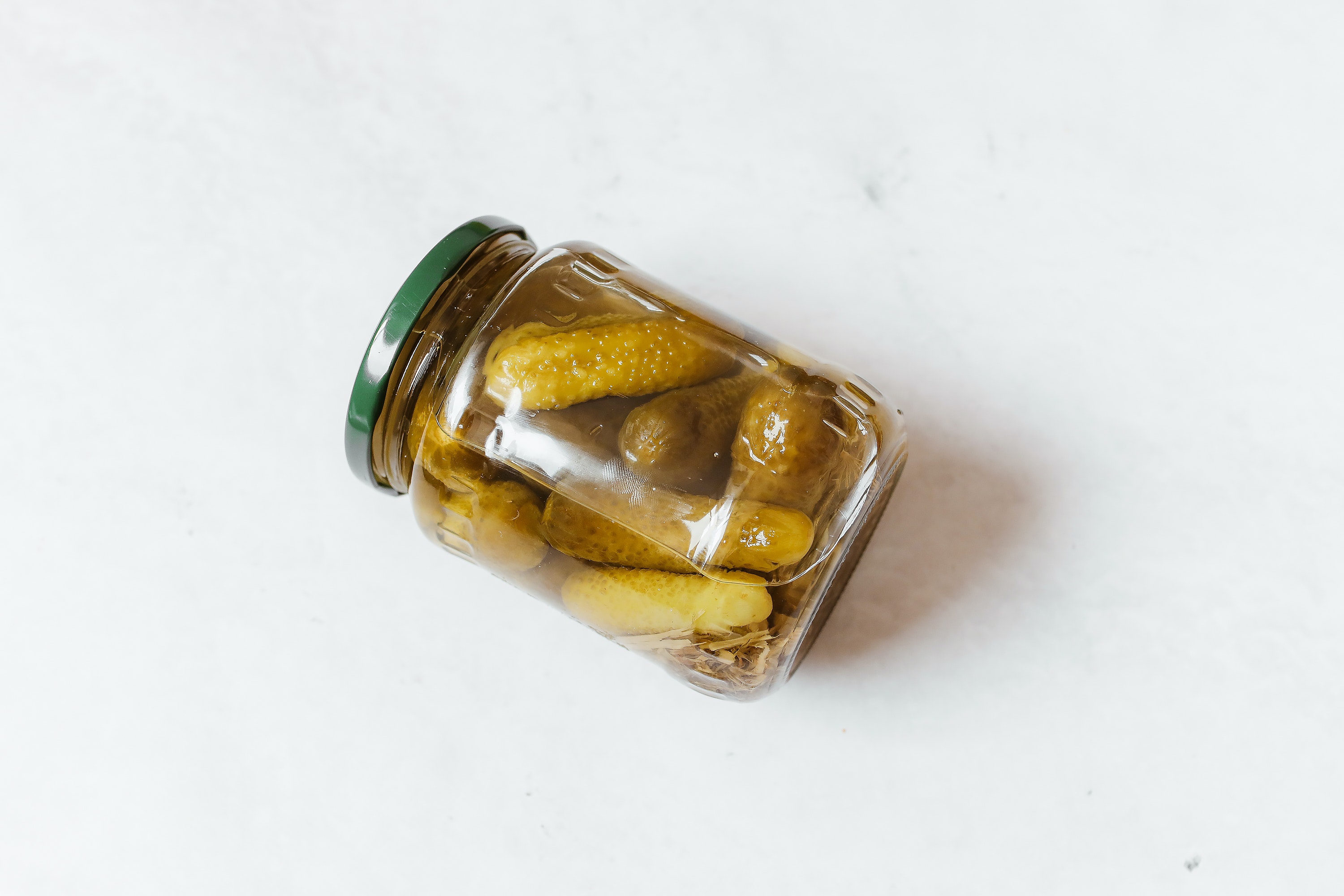
The Perfect Formula for Vinegar, Salt, and Sugar Pickling
For a foolproof pickling experience, follow this golden formula: For every gallon of vinegar with 5% acidity, add four tablespoons of pickling salt (ensure it's iodine-free), and two tablespoons of granulated sugar. Or, if you're working with a smaller batch, for every liter of vinegar, incorporate one tablespoon of salt and half a tablespoon of granulated sugar. With this precise equation, your pickling endeavors are set to thrive.
How to Craft the Ultimate Pickles?
Step 1: Jar Preparation
Begin your pickling journey by giving your jars a thorough cleanse. Wash them meticulously with warm, soapy water, or take the hassle out of the process by running them through the dishwasher. Once clean, ensure they're sterilized for safe canning. Opt for wide-mouth quart jars; their generous size easily accommodates cucumbers. When it comes to sterilizing the lids, remember they require different treatment from the jars. Cleanse them with warm, soapy water, allow them to air dry completely, and then submerge them in boiling water for the final two minutes. Any lids showing signs of age or rust should be replaced. While some recent guidelines suggest skipping the lid boiling step, I recommend it for an added layer of safety and peace of mind.
Step 2: Cucumber Preparation
Select top-quality cucumbers devoid of blemishes or spots. A good scrub under running water with a brush is all they need. For particularly curvy cucumbers, cut them lengthwise for easier jar fitting, as illustrated above. For horseradish, slice it into slender, elongated pieces that can snugly nestle amidst the cucumbers.
Step 3: Jar Packing
Begin filling your jars with cucumbers, garlic cloves, black peppercorns, dried dill, and the prepared horseradish slices. Ensure you place 1-2 pieces of horseradish on top for that extra zing.

Step 4: Crafting the Pickling Mixture
In a spacious pot, combine vinegar, salt, and sugar, bringing the mixture to a vigorous boil. Introduce bay leaves, thyme, and mustard seeds into this aromatic concoction. Reduce the heat to a simmer, letting the mixture gently bubble away for approximately 2-3 minutes. Remove it from the stove and allow the liquid to rest for 5-10 minutes.
Step 5: Filling the Jars with Liquid Gold
Before pouring the piping hot pickling mixture into the jars, place them on a trusty metal tray. The metal's thermal conductivity ensures even heat distribution, minimizing the risk of thermal shock that could lead to jar breakage. With a steady hand and a ladle, slowly fill the jars with the scalding pickling liquid, ensuring the cucumbers are fully submerged.
Seal the jars tightly and store them in a cool, frost-free location. This prevents fermentation, preserving the crispness and delectable flavor of your pickles throughout the winter season.
Frequently Asked Questions about pickled cucumbers
When to Savor the Full Flavor of Your Pickles
For the most delectable experience, allow your pickles to rest for a patient 3-6 weeks before indulging in their savory goodness.
Generally, I commence the pickling process during the cooler months of September and October, eagerly awaiting the pickles' peak flavor, which typically emerges in late November or December.
These pickled cucumbers, prepared using this recipe, can delight your taste buds throughout the entire winter season, maintaining their deliciousness until May.
How Long Does It Take for Cucumbers to Become Pickles?
Typically, the transformation from cucumber to pickle takes about 3-6 weeks. If you opt for whole cucumbers, the full six weeks may be necessary, while sliced cucumbers tend to pickle more expeditiously.
Sliced or Whole Cucumbers: Which is Better for Pickling?
Absolutely, slicing the cucumbers is a splendid choice. Sliced cucumbers not only pickle faster but also offer greater convenience when plucking them from the jar.

Shelf Life of Canned Pickles
When stored in a cool location, canned pickles can maintain their delectable quality for a duration of 1-2 years.
The Vital Role of Vinegar in Pickling
Vinegar, boasting mild acetic acid, serves a pivotal role in pickling by elevating the cucumbers' acidity and safeguarding against potentially harmful microorganisms within the jars. This preservation process ensures the cucumbers remain in prime condition, warding off spoilage.
Sweet and Sour Pickle Recipe?
No, this isn't a sweet-and-sour cucumber pickle recipe. Although a hint of sugar is incorporated into the brine, its primary purpose is to harmonize the vinegar's acidity and enhance the overall flavor profile. This recipe leans more towards a savory brine than a sugary one.
Can You Reuse Pickle Juice for a New Batch of Pickles?
I highly discourage reusing pickle juice for new pickles, as it may pose health risks. Always utilize fresh brine for each new batch of cucumbers, especially when following my recipe.
However, you can repurpose leftover pickle juice creatively by using it to flavor dips, craft salad dressings, or infuse marinades.
Storing Jars Without a Water Bath
Indeed, there's no need for a water bath. Simply ensure the jar lids are securely sealed before storing them in a cool location.
Thanks to vinegar's potent botulism-eliminating properties and the use of pure, undiluted vinegar in this recipe, a water bath is unnecessary. It's essential that the vinegar utilized contains at least 5% acetic acid.
Additional ingredients such as horseradish root, mustard seeds, dill, sugar, and salt play a vital role in flavor enhancement and preservation.
Why No Water Bath?
While numerous American recipes dilute vinegar with water and then subject the jars to processing, this recipe takes a different approach. We employ undiluted 5% vinegar, steeped with spices, and poured over the cucumbers—no water enters the equation. This results in pickles with a more pronounced tang (perfect for complementing winter roasts) while effectively warding off bacteria.
These pickles require 3-6 weeks to mature and, since the vinegar remains undiluted, bypass the need for processing. In essence, if the pickle juice's acidity remains around 5%, there's no necessity for a water bath.
Where to Store the Jars
For those with an abundance of jars, a cool spot like a garage, basement, or pantry (as long as it remains above freezing temperatures) serves as the ideal storage location. Moreover, these vibrant jars of cucumbers make splendid gifts!
Open Jar, Freshness Duration
Once a jar is opened, you can relish its contents for approximately 2-4 months while maintaining their fresh and flavorful essence. Enjoy!
Where to buy pickled cucumbers?
Currently, there are many factories producing pickled cucumbers in Vietnam as well as around the world. BPFOOD's pickled cucumbers are always highly appreciated for their good quality, the cucumbers meet organic standards, the products are packaged in environmentally friendly jars or cans, and the preservation quality is optimal.
If you have any requests, please contact us at the website: http://bpfood.com.vn/
BPFOOD - Vietnam canned fruits, vegetables and agriculture products
MHDI Building, no. 68, Nguyen Co Thach street, Nam Tu Liem district, Hanoi, Vietnam
Factory: Tien Lu, Hung Yen
Mob/What’sapp/Viber: 0084 868989350
Email:
info@bachphuongglobal.com
Website: www.bpfood.com.vn
Related posts