

GROWING CUCUMBERS EXPORTING/ ВЫРАЩИВАНИЕ ОГУРЦОВ ЭКСПОРТ
Sharing about his Japanese cucumber cultivation, Mr. Dinh Duc Cuong, Tien Phuong 1 hamlet, Van Phuong commune (Ngo Quan) said. After a period of self-discovery and research on local soil quality, in early 2021, Mr. Cuong started to experiment with 2 hectares of Japanese cucumber varieties, giving a yield of 60 tons.
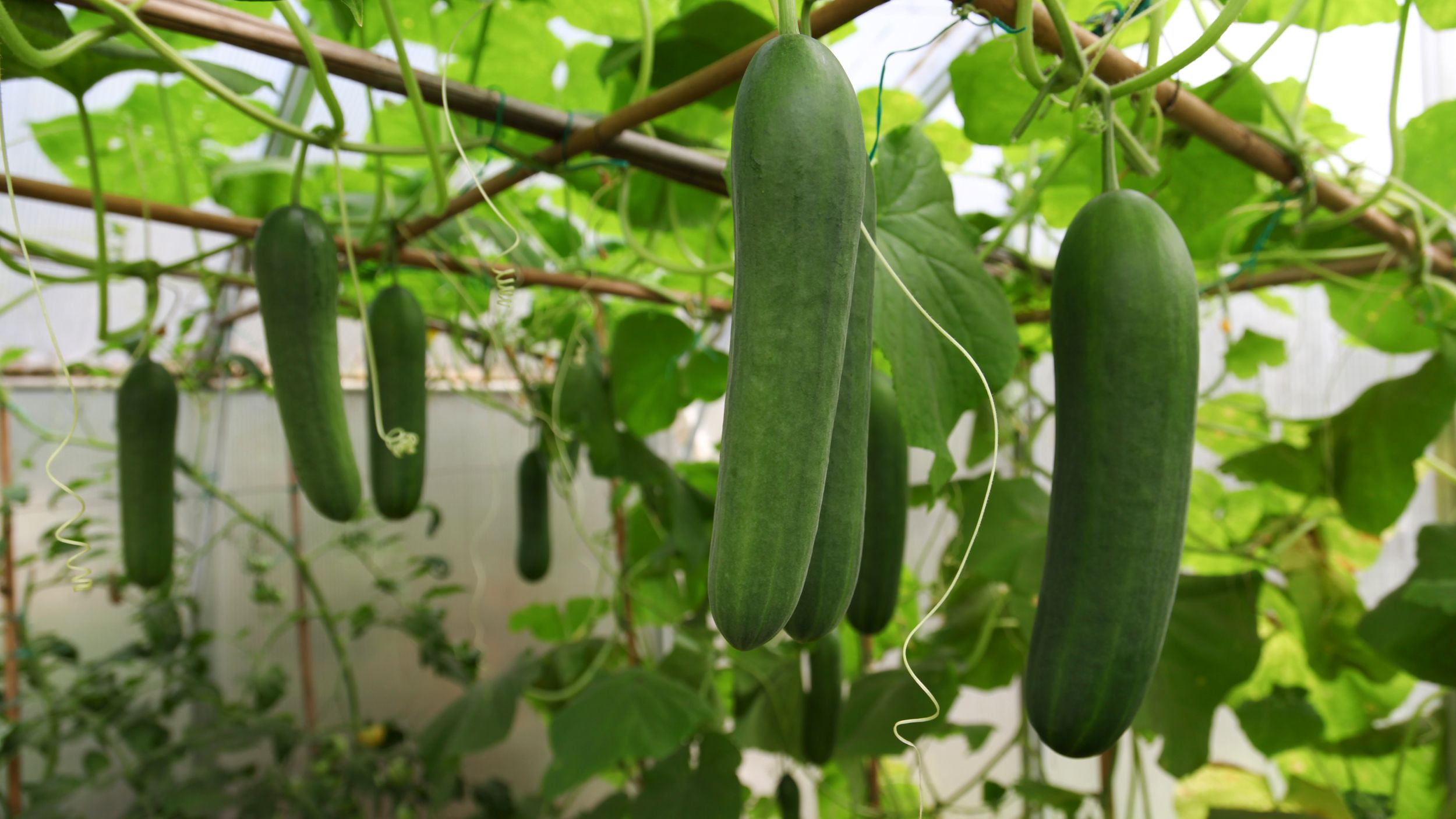
Realizing that this crop has a high yield, this year he leased the fields of many people in the commune, expanding the area to more than 10 hectares. In addition, investing in upgrading, about to add more machines and agricultural tools for planting.
"Growing cucumbers requires a lot of work. In addition to preparing the vines, you also have to regularly prune yellow and wilted leaves to avoid spreading diseases to the field. Japanese cucumbers are a short-term crop, only for short-term harvest, within 30-40 years has started to bear fruit and the harvest time can last from 1.5 to 2 months after that", Mr. Cuong said.
The Japanese melon varieties are well adapted to the climate and soil in the northern provinces of Vietnam. Mr. Cuong grows 2 crops/year, autumn-winter and winter-spring are the main crops, cucumbers grow and give the highest yield. Productivity can reach 40-60 tons/ha, revenue from 120-150 million VND/ha/crop.
At harvest time, cucumbers are transported to a processing plant in Hoa Binh province for processing and canning. This crop is estimated at 40-45 tons/1ha, and revenue is estimated at over 1 billion.
Japanese cucumbers are hermaphroditic plants that do not need bee pollination, yielding 3 times more than common cucumber varieties. Growing Japanese cucumbers for export requires ensuring that the standards are followed, the tree care process goes through many steps.
It can be seen that Mr. Cuong's joint model of growing Japanese cucumbers for export was initially successful and brought practical economic benefits. The model has opened up new opportunities in agricultural production in the direction of concentrated commodities and improved land use coefficient, contributing to creating jobs and increasing incomes for local farmers.
Рассказывая о выращивании огурцов в Японии, сказал г-н Динь Дык Куонг, деревня Тьен Фуонг 1, коммуна Ван Фуонг (Нго Куан). После периода самопознания и исследования качества местной почвы в начале 2021 года г-н Куонг начал экспериментировать с 2 гектарами японских сортов огурцов, что дало урожай 60 тонн.
Понимая, что эта культура имеет высокую урожайность, в этом году он сдал в аренду поля многих жителей коммуны, расширив площадь до более чем 10 га. Кроме того, инвестируя в модернизацию, собираются добавить больше машин и сельскохозяйственных орудий для посадки.
«Выращивание огурцов требует много труда. Помимо подготовки лозы, вы также должны регулярно обрезать желтые и увядшие листья, чтобы избежать распространения болезней на поле. в течение 30-40 лет начал плодоносить, и время сбора урожая может длиться от 1,5 до 2 месяцев после этого", - сказал г-н Куонг.
Японские сорта дыни хорошо приспособлены к климату и почве северных провинций Вьетнама. Г-н Куонг выращивает 2 урожая в год, осенне-зимние и зимне-весенние культуры являются основными культурами, огурцы растут и дают самый высокий урожай. Урожайность может достигать 40-60 т/га, выручка от 120-150 млн донгов/га/урожай.
Во время сбора урожая огурцы транспортируются на перерабатывающий завод в провинции Хоабинь для переработки и консервирования. Урожайность оценивается в 40-45 тонн/1 га, а выручка оценивается более чем в 1 миллиард долларов.
Японские огурцы — растения-гермафродиты, не нуждающиеся в пчелином опылении и дающие в 3 раза больше урожая, чем обычные сорта огурцов. Выращивание японских огурцов на экспорт требует соблюдения стандартов, процесс ухода за деревьями проходит много этапов.
Видно, что совместная модель г-на Куонга по выращиванию японских огурцов на экспорт изначально была успешной и принесла практическую экономическую выгоду. Модель открыла новые возможности в сельскохозяйственном производстве в направлении концентрированных товаров и улучшения коэффициента землепользования, способствуя созданию рабочих мест и увеличению доходов местных фермеров.
(Resource:https://danviet.vn/ninh-binh-trong-dua-chuot-nhat-chi-chit-qua-doanh-thu-tien-ty-20220507174312734.htm)
BPFOOD - Vietnam canned fruits, vegetables and agriculture products
MHDI Building, no. 68, Nguyen Co Thach street, Nam Tu Liem district, Hanoi, Vietnam
Factory: Tien Lu, Hung Yen
Mob/What’sapp/Viber: 0084 868989350
Email:
info@bachphuongglobal.com
Website: www.bpfood.com.vn
Related posts
.jpg)